How to Help a Child Grieve a Pet
What to say, what not to say, and how to walk them through it
For many children, the death of a pet is their first real encounter with loss. It is the moment when the world stops being a place where everything works out, and becomes a place where love and loss are woven together. As a parent, you cannot prevent that lesson. But you can shape it. You can walk beside them and show them that grief is not something to fear — it is something to move through, together.
If you are reading this, you are probably in the middle of it. Your child just lost a dog, a cat, a hamster, a goldfish — and you are trying to figure out the right thing to say. The fact that you are looking for guidance is already proof that you are doing this well. Let me help with the rest.
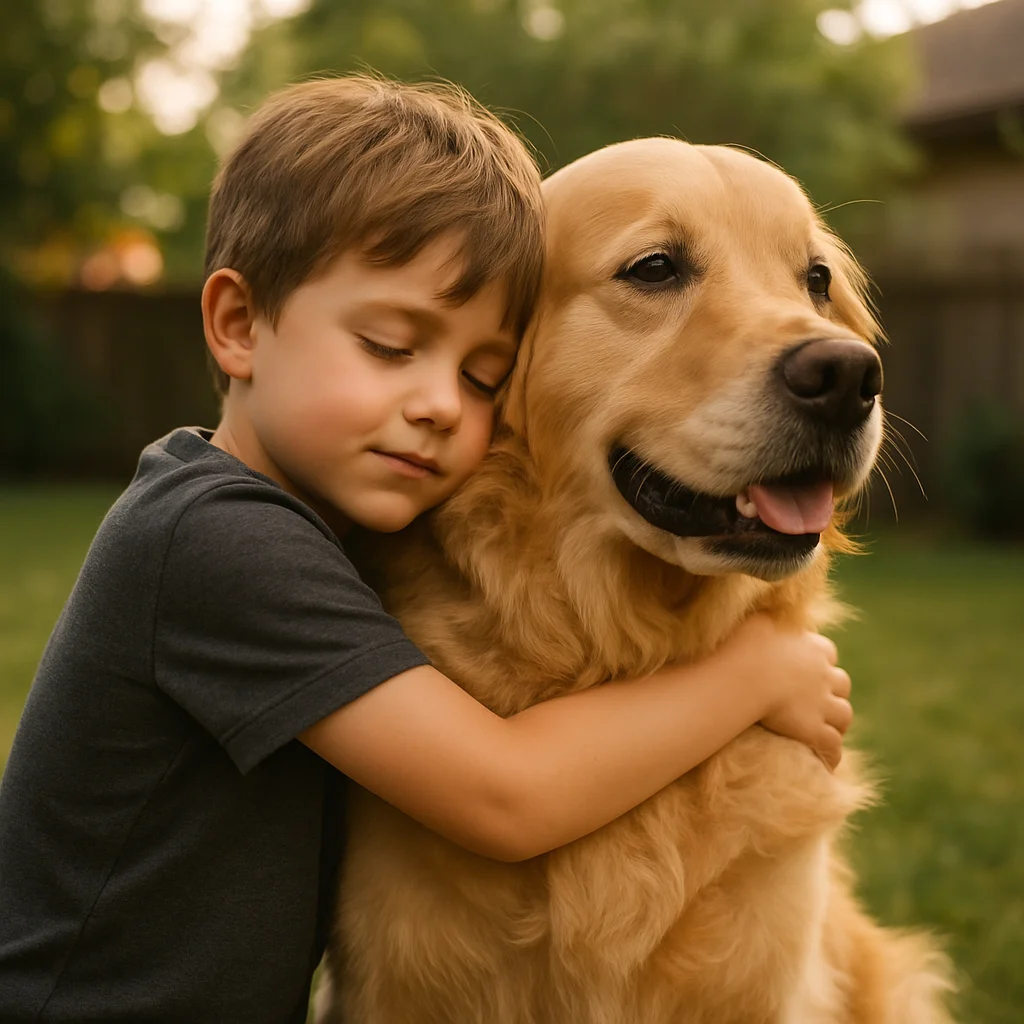
The most important thing: be honest
This is the part most parents get wrong, and it comes from a good place — the desire to protect. But when we tell a child that their dog "went to live on a farm" or "went to sleep" or "went away," we create more problems than we solve. A child who thinks the dog went to a farm will wonder why they cannot visit. A child who hears "went to sleep" may develop a fear of bedtime. A child told their pet "went away" may feel abandoned — and may wonder if the people they love might also leave without warning.
Use the real words. "Max died." Say it gently, with love, but say it. Then follow it with what they need to hear: "His body stopped working, and he is not coming back. It is very sad. We loved him so much, and it is okay to cry."
You are not being cruel. You are being safe. Honest language, delivered with warmth, builds trust. It tells your child that you will always tell them the truth, even when the truth is hard — and that foundation will serve them through every loss that follows this one.
What to say by age
Toddlers and preschoolers (ages 2–4): Children this young do not understand that death is permanent. They may ask where the pet is repeatedly, over days or even weeks. Answer consistently and simply each time: "Buddy died. He is not coming back. We miss him." Do not be surprised if they ask and then immediately return to playing. This is normal processing at this age. They absorb loss in small doses.
Elementary age (ages 5–9): This is the age when children begin to understand that death is final. They may have very specific, practical questions: Does it hurt? Where is his body? Can he still hear me? Is it my fault? Answer honestly and age-appropriately. "No, it was not your fault" is a sentence many children need to hear more than once. If your family has spiritual beliefs about what happens after death, this is a natural time to share them — gently, as comfort, not as deflection.
Tweens and teens (ages 10–17): Older children often grieve in ways that look nothing like what you expect. Some will cry openly. Some will disappear into their room and say nothing. Some will seem fine for days and then break down unexpectedly. Some will express anger before sadness. All of these are valid responses. Give them space, but make sure they know the door is open. "I am here when you want to talk about Scout. No rush. No pressure. But I am here."
What NOT to say
"Don't cry." — Crying is exactly what they should be doing. Telling a child not to cry teaches them that grief should be hidden.
"We can get a new one." — Even if another pet is in the future, this sentence tells a child that love is replaceable. It is not. Their dog was not a broken toy to be swapped out.
"At least she had a good life." — True, but unhelpful in the acute moment. A child does not need perspective right now. They need permission to be sad.
"Be strong." — Strength, to a child, means don't feel. What they need to learn is that feeling is the strong thing. Grief takes more courage than stoicism.
"It was just a hamster / fish / cat." — Never. The size of the animal has nothing to do with the size of the love. A child who loved a goldfish is grieving just as really as a child who loved a Great Dane.
Let them see you grieve
This might be the most powerful thing you can do. When your child sees you wipe your eyes and say, "I really miss her," they learn something profound: that the adults in their life feel the same things they feel. That sadness is not weakness. That a family can be sad together and still be okay.
You do not need to perform grief, and you do not need to fall apart in front of them. But letting them see a real, measured, honest emotional response gives them permission to do the same. It normalizes the experience of loss in a way that no explanation ever could.
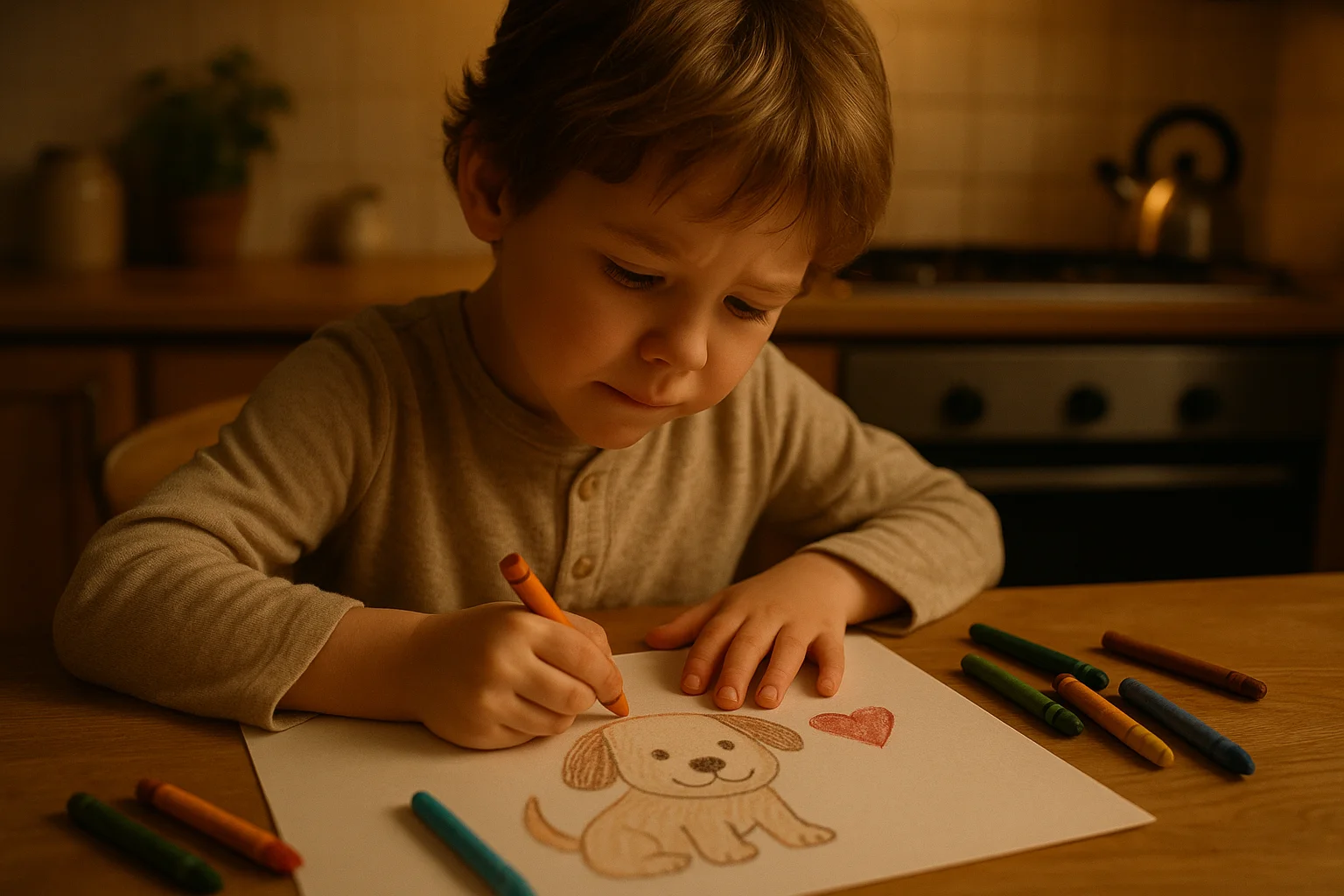
Memory-making activities that help
Children process grief best when they can do something with their hands and hearts. Here are activities that families have found meaningful:
Draw or paint a picture of the pet. Let the child choose how — realistic, abstract, silly, serious. There is no wrong way. Hang it somewhere visible if they want.
Write a letter to the pet. What would they say if they could say one more thing? Some families put the letter in a special box or bury it in the yard.
Make a photo collage or memory book. Let the child choose the photos. Ask them to narrate: "This is the time we went to the lake and Duke jumped off the dock." The storytelling is as important as the photos.
Plant something. A flower, a tree, a small garden. The act of nurturing something new while honoring something lost is powerful, especially for children who need a physical place to direct their care.
Create a digital memorial. Gather photos and memories in one place where the whole family — and friends, grandparents, classmates who loved the pet — can visit and contribute. Sometimes a child who will not talk to you about their grief will write something on a memorial page that takes your breath away.

When to worry
Most children move through pet grief in a healthy way, especially with support. But occasionally, the loss can trigger a more prolonged or complicated response. Watch for these signs if they persist beyond a few weeks:
Significant changes in eating or sleeping patterns. Withdrawal from friends, school, or activities they normally enjoy. Regression to younger behaviors — bedwetting, thumb-sucking, clinginess beyond what is typical for their age. Repeated statements about wanting to die or be with the pet. Intense guilt that does not respond to reassurance.
If you see these signs, do not panic — but do act. Talk to your pediatrician or a child therapist. Complicated grief in children is treatable, and early intervention makes a significant difference. Sometimes a child who seems to be struggling with pet loss is actually processing a different, deeper fear — about their own mortality, about losing a parent, about the impermanence of the world. A professional can help untangle those threads.
The gift hidden inside the grief
Here is something that may not feel true yet but will, in time: this experience is teaching your child something essential about being human. They are learning that love involves risk. That caring for another living thing is an act of courage. That endings do not erase beginnings. That sadness and gratitude can exist in the same moment.
They are learning, in the safest possible way, how to grieve — and they are learning it with you beside them. When they face the bigger losses that life will inevitably bring, they will not be facing them for the first time. They will have a template. And that template will include the memory of a parent who sat with them, told them the truth, cried with them, and helped them find a way through.
“The depth of a child's love for a pet is among the purest things in the world. It deserves to be grieved with the same seriousness it was felt.”
Your child loved that animal with their whole, unguarded heart. That love changed them. And the grief — if you help them carry it well — will change them too. Into someone kinder, braver, and more compassionate than they were before.
“Where they wait for us.”