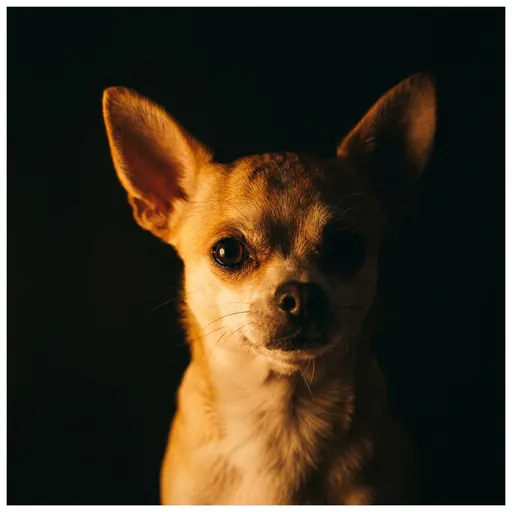
What It Is Like to Lose a Chihuahua
The grief is proportionate to the love, not to the weight
The bed is wrong. That is the first thing. Not the house, not the routine — the bed. The specific weight on the left side of the pillow is gone. Five pounds should not be able to change how a bed feels. It did. For fifteen or sixteen or seventeen years, you fell asleep with a weight so small it barely registered on any scale, and your body memorized it so completely that its absence wakes you up in the middle of the night, reaching for something that is not there.
Chihuahua grief is disproportionate to what the world expects, and proportionate to what was actually there. What was actually there was a dog who chose you — fiercely, completely, for over a decade — and organized their entire existence around yours. The loss is not small. The people who say otherwise have never been chosen by a Chihuahua.
The choosing
No other breed bonds with the specificity of a Chihuahua. They did not love the family. They loved you. One person, selected with an exclusivity that bordered on territorial, defended with a ferocity that belied their size. You were not their owner. You were their person, and the distinction mattered to them in ways that organized every moment of every day.
They knew whose lap they belonged in, whose heartbeat they fell asleep to, and whose voice mattered more than any other sound in the world. Everyone else had to earn access, and the earning was slow, and the terms were set entirely by a four-pound dog who had never once been confused about who was in charge. They chose you on day one and never reconsidered. Not once.
What the world gets wrong
The world has opinions about Chihuahuas. They are aggressive. They are yappy. They are purse dogs, accessories, not real dogs. The world is wrong about all of it. What looked like aggression to outsiders was loyalty so concentrated it had a perimeter. What sounded like yapping was a security system operated by a creature who weighed less than most cats but had more conviction than most humans.
People will say things after your Chihuahua dies. 'It was just a Chihuahua.' 'You could get another one.' 'At least they lived a long time.' Every one of those sentences is wrong. The grief is not reducible. The bond was not generic. And sixteen years is not enough — it is just the longest version of not enough.
The weight
Chihuahua owners describe the weight. Not the size — the weight. The specific pressure of five pounds on your chest while you watched television. The warmth of them in the crook of your arm. The way they burrowed under blankets with a determination that suggested the blanket was a critical survival structure and not a piece of fabric. The body remembers a weight that small. The absence of it is physical, not abstract.
You carried them. In your arms, in a bag, against your chest. You carried them because they wanted to be carried, and because being carried meant being close, and being close was the entire point of being a Chihuahua. Your arms remember the weight. Your arms keep expecting it.
The math
Chihuahuas typically live 14–18 years, making them one of the longest-lived breeds. That math is supposed to be a gift — and it is — but it also means the loss arrives after a decade and a half or more of a bond so singular that its absence reshapes everything. Heart disease, particularly mitral valve disease, is the leading concern in senior Chihuahuas. Collapsing trachea, dental disease, and luxating patellas are also common.
Because Chihuahuas live so long, many families manage chronic conditions across years rather than months. The long goodbye is often a gradual dimming, not a sudden absence. You watch them slow. You adjust the routine. You carry them up stairs they used to climb. And somewhere in the gradual, the ending arrives, and it is still a shock, because nothing about sixteen years of that kind of love prepares you for zero.
The perimeter
Your Chihuahua managed a perimeter. You may not have noticed it because you lived inside it, but everyone else did. The growl when someone sat too close. The positioning — always between you and the door, or between you and the stranger, or between you and anything that was not them. They ran security for your entire life, and the security detail weighed four pounds and had ears the size of satellite dishes.
The perimeter is unmanned now. No one growls when someone sits too close. No one positions themselves between you and the world. You are, for the first time in sixteen years, unguarded. It does not feel like freedom. It feels exposed.
What stays
The blanket stays. The specific blanket they burrowed into, every season, every year — it still smells like them if you press your face into it, and you have pressed your face into it more times than you will tell anyone. The sunny spot on the porch stays empty. The purse stays, with the shape of them still pressed into the lining. And the choosing stays — the knowledge that you were selected, completely, by a creature who had very high standards and decided you met them.
Chihuahua grief does not shrink. It clarifies. The acute phase — the wrong bed, the empty arms, the unmanned perimeter — eventually settles into something you carry. It is not lighter. It is just yours. The grief is proportionate to the love, not to the weight.
A bridge for them
WenderBridge exists because we believe the grief is real, regardless of what anyone else says. A Chihuahua's bridge is free to create, free to visit forever, and free to share — because a love that fierce deserves a permanent place, no matter how small the dog who carried it.
“Where they wait for us.”