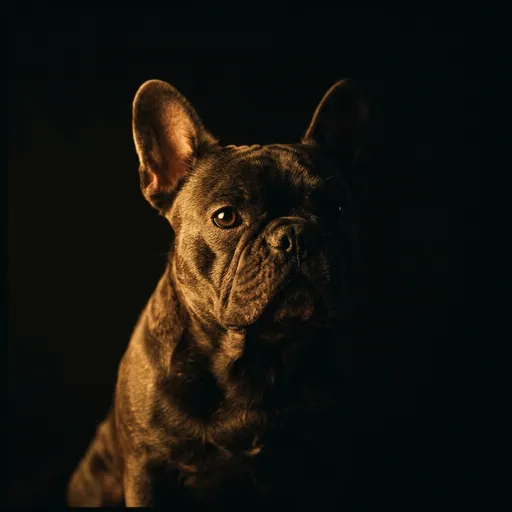
What It Is Like to Lose a French Bulldog
The loudest silence
The silence is wrong. That is what Frenchie families say first. The apartment — and it was almost always an apartment, or a small house, or a space designed for closeness — is quiet in a way it never was when they were alive. The snoring, the snorting, the breathing that was always slightly labored and always entirely familiar. You knew every sound they made. Now you hear none of them.
Frenchie grief is physical and close-range. They were not a dog who ran beside you in open fields. They were a dog who sat on you, pressed against your ribs, breathed loudly into your neck, and claimed every cushion in the house as sovereign territory. The loss is measured in inches, not miles. The couch is the wrong temperature. The pillow smells different. The bedroom is too quiet to sleep in.
The sounds they made
No other breed communicates like a Frenchie. The snort vocabulary alone had fifteen entries. There was the contented snuffle — the one that meant they approved of the current seating arrangement. The indignant huff when you moved them off the bed. The grumbling commentary when dinner was thirty seconds late. The particular breathing pattern you learned to read like a second language, the one that told you when they were comfortable, when they were overheated, when something was wrong.
You learned their respiratory system the way a parent learns a baby's cries. You could hear across the house whether the breathing was normal or not. That monitoring was part of the relationship — not a burden, not a chore, but a constant thread of attention that connected you to them even when you were in separate rooms. The thread is cut. The monitoring has nowhere to go.
What people misunderstand
People sometimes minimize the loss because of the breed's health struggles — 'at least they're not suffering anymore' — as though the breathing difficulties meant the life was diminished. It was not. The life was enormous. It was loud and opinionated and physically pressed against you on every available surface. The health management was part of the relationship, not a diminishment of it. You knew their vet by first name. You knew which temperatures were safe and which were not. You carried them up stairs when it was hot. None of that was a burden. All of it was love.
French Bulldogs typically live 10–12 years. Brachycephalic syndrome, spinal issues, and allergies are common companions throughout their lives. Many Frenchie families become amateur veterinarians by necessity — managing the airway, watching for overheating, knowing when the snoring changes from normal to concerning. The final chapter is often complicated by the very structures that made them who they were. The face you loved is the face that failed them.
What stays
The things that stay are tactile. The warm spot on the couch where they always sat. The head tilt — the bat ears framing a face that somehow communicated more with a single look than most people manage with entire sentences. The stubborn refusal to walk in the rain, the absolute commitment to the spot they chose, the way they looked at you when you tried to move them as though you had suggested something genuinely offensive.
French Bulldog grief does not diminish in proportion to their size. The smallest dogs leave the loudest silence. The apartment that was full of snoring and opinions and warmth is now just an apartment, and the difference between those two things is the entire distance of the loss.
A bridge for them
WenderBridge exists because we believe every dog who was loved deserves a permanent place. A French Bulldog's bridge is free to create, free to visit forever, and free to share — because the love they pressed into your ribs every night was never small, and the place that holds it shouldn't be either.
“Where they wait for us.”