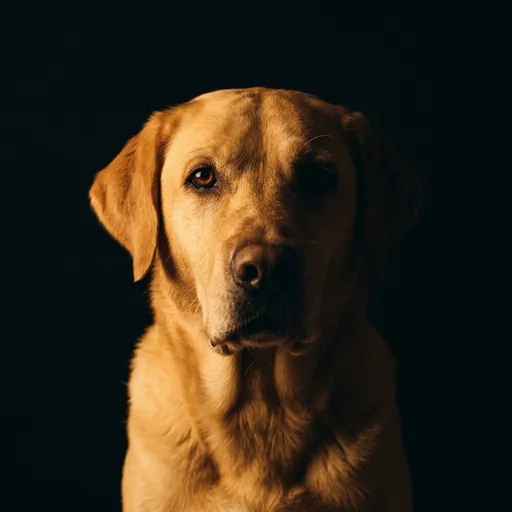
What It Is Like to Lose a Labrador Retriever
The quiet after the enthusiasm
The quiet is the first thing Lab families name. A house with a Lab in it was never quiet — the tail against the wall, the panting, the click of nails on the kitchen floor, the sound of them drinking water like it was their last day on earth. When that stops, the silence is physically disorienting. You hear it in rooms you didn't know they'd been in.
Lab grief is not dramatic. It is relentless. It is the tennis ball under the couch you cannot bring yourself to pick up. It is the water bowl that used to need filling twice a day and now sits untouched. It is the passenger seat of the car, still covered in hair, still carrying the indent of seventy pounds of dog who believed every car ride was the greatest adventure in the history of the world.
The enthusiasm problem
No other breed was that excited about everything. Breakfast was a religious experience. The walk was an event of global significance. The car ride — any car ride, even to the vet — was met with a level of joy that bordered on clinical. They spun in circles. They knocked things off the counter with their tail. They greeted you like you had been gone for years when you walked back from the mailbox.
That enthusiasm was not a quirk. It was the architecture of the relationship. A Lab loved you at full volume, full speed, full commitment — and they did it every single day for twelve years without once dialing it back. The absence of that enthusiasm is not peace. It is a house running at the wrong speed.
What people say
People think they understand because everyone knows Labs. They are the most popular breed in the country. That familiarity sometimes produces the wrong kind of sympathy — 'you can always get another Lab' — as though the breed is the thing you loved, rather than the specific, irreplaceable dog who happened to be one. No two Labs are the same dog. The one who counter-surfed the Thanksgiving turkey. The one who was afraid of thunder. The one who ate an entire shoe and seemed confused about why you were upset. That dog. Not a Lab. That Lab.
The commonness of the breed does not make the loss common. It makes the loss invisible. Everyone has had a Lab, or known a Lab, or petted a Lab at the park, so the grief can feel like it doesn't warrant the space it takes up. It does. It warrants every inch.
The body keeps score
Labs typically live 10–12 years. Hip and elbow dysplasia are common, and many families navigate the slow decline of mobility in the final years — the dog who once launched into every lake now needs help onto the couch. Cancer rates are significant. The last chapter is often a negotiation between the dog's spirit, which never quits, and the body, which does. Labs keep wagging through things that would stop other breeds. That is beautiful. It also makes the end harder to identify, because they never tell you they are done.
Labrador Retriever grief is not proportional to the years. It is proportional to the enthusiasm — twelve years of a creature who was so excited about breakfast that they spun in circles every morning, same kibble, same bowl. You have never been that happy about anything in your life. And now the kitchen is still, and the bowl is full, and the morning is just a morning.
A bridge for them
WenderBridge exists because we believe every dog who was loved deserves a permanent place. A Labrador Retriever's bridge is free to create, free to visit forever, and free to share — because the love they gave was given without reservation, and the place that holds it should be the same.
“Where they wait for us.”