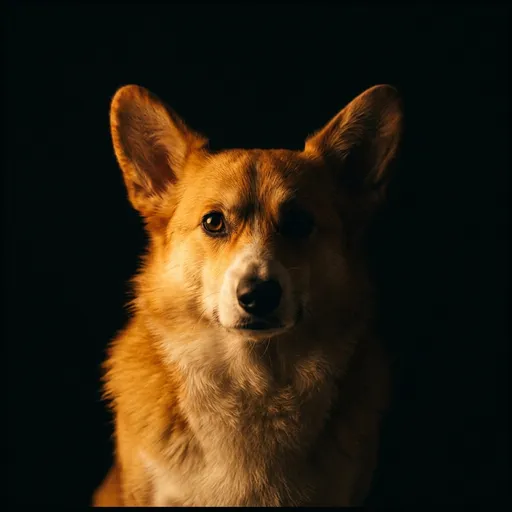
What It Is Like to Lose a Pembroke Welsh Corgi
The house was managed
The house was managed. That is the thing Corgi families lose — not just a dog, but the entire operational structure of the household. The Corgi enforced the schedule. The Corgi herded the children. The Corgi had an opinion about the doorbell, the delivery driver, the exact time dinner should appear, and the precise moment everyone should go to bed. Without them, nobody tells you when anything is supposed to happen.
Corgi grief is the grief of losing the person in charge. Thirty pounds of low-riding authority that nipped ankles, barked orders, and ran the household with the efficiency of someone who had been bred to manage livestock for centuries and saw no reason to stop just because the livestock was now a family of four in the suburbs.
The herding instinct
They herded everything. The children into groups. The dinner guests away from the kitchen. The other dog into whatever position the Corgi decided was correct. The ankle nip was not aggression — it was management. They had been doing this for a thousand years, and the fact that they were now doing it in a living room instead of a Welsh hillside did not diminish their commitment to the task.
The specific bark for every category of doorbell. The positioning at the top of the stairs to supervise all comings and goings. The way they planted themselves in the center of the hallway and made you walk around them, because the center of the hallway was the command post and they were not moving. All of that was the Corgi. All of that is gone.
The internet Corgi and the real one
People loved the Corgi from the outside — the internet Corgi, the sploot, the butt, the ears, the loaf shape. And that was real. But the grief is not about the internet version. The grief is about the specific dog who enforced bedtime at 8 p.m. without being trained to do it, who nipped the plumber, who splooted on the kitchen tile at exactly the same spot every afternoon. The meme was cute. The dog was irreplaceable.
Pembroke Welsh Corgis typically live 12–15 years. Degenerative myelopathy and hip dysplasia are the breed's shadows — particularly cruel for a dog whose identity was built on movement, on herding, on the low-to-the-ground scramble that covered distances a dog that shape had no business covering. Watching a Corgi lose mobility is watching the manager lose their ability to manage. They still try. They still bark the orders. The body just stops following through.
What stays
The things that stay are operational. The bedtime that no one enforces. The doorbell that goes unanswered — not unanswered by a person, but unanswered by the bark that used to announce it with the authority of a town crier. The spot on the kitchen tile where the sploot happened every afternoon, the exact same spot, worn slightly smoother than the tiles around it.
Corgi grief does not fade into simple sadness. It fades into disorganization. The house ran on Corgi logic — herding, scheduling, supervising — and without the Corgi, the logic collapses. Nobody is in charge. Nobody nips the ankles. Nobody has an opinion about the doorbell. The house was managed. Now it is just a house.
A bridge for them
WenderBridge exists because we believe every dog who was loved deserves a permanent place. A Corgi's bridge is free to create, free to visit forever, and free to share — because the dog who managed your household with thirty pounds of authority deserves a place that will never clock out.
“Where they wait for us.”