What to Do When Your Dog Dies: A Practical Checklist
A calm guide for the hardest day
If you are reading this, you are probably in the middle of the worst day you have had in a long time. Maybe you are sitting on the floor next to them, or you just got home from the vet, or you are lying in bed at 2 a.m. knowing that tomorrow is the appointment. Whatever brought you here — I am sorry. And I want to help you through the next few hours and days, one step at a time.
This is not a grief article. You will find that further down the road, when you are ready. This is a practical guide — the checklist you need right now, written by people who have been exactly where you are. Take what you need. Skip what does not apply. Come back to it when you are ready for the next step.
The first hour
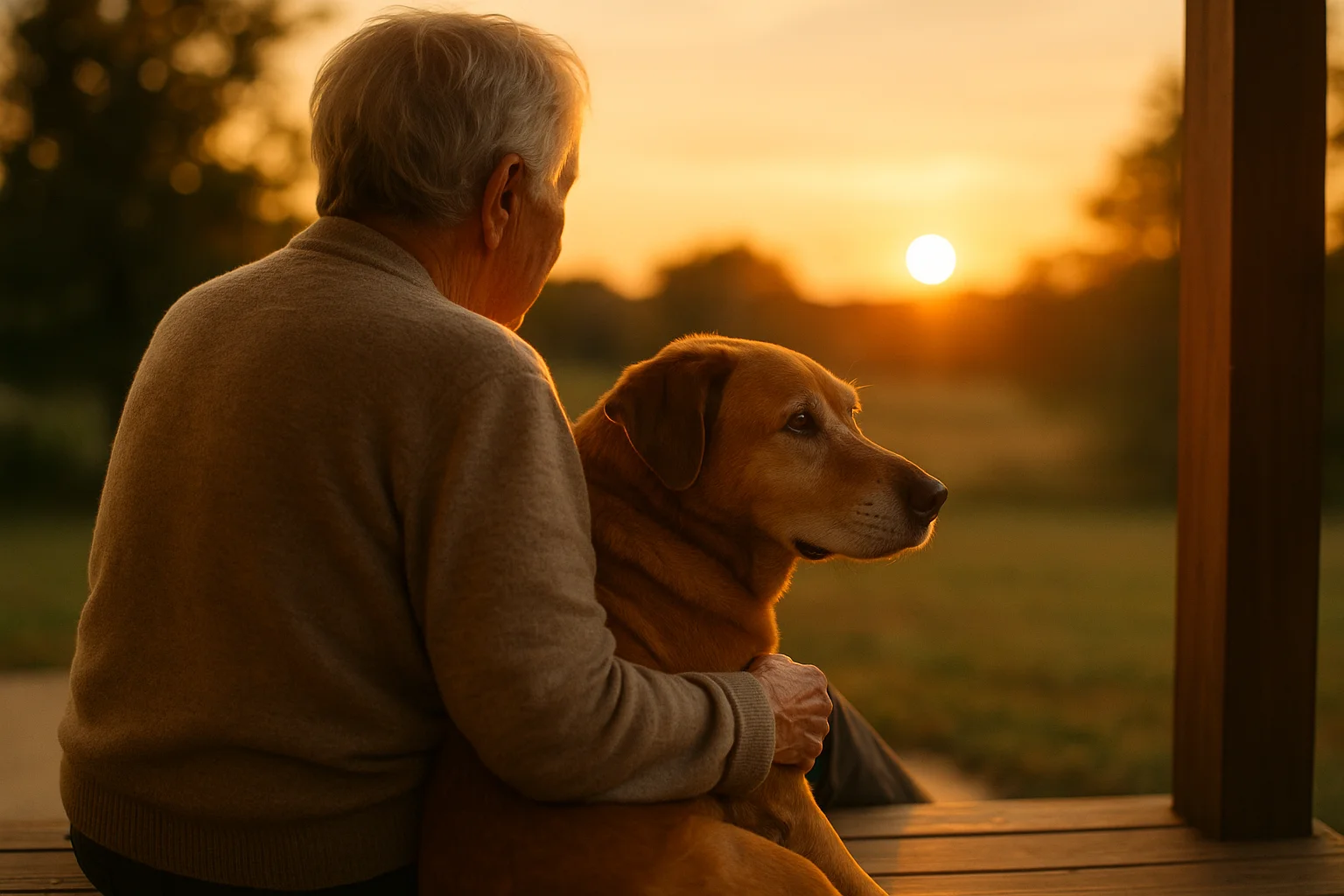
If your dog has just passed at home, there is no emergency. You do not need to do anything immediately. Sit with them. Touch them. Say what you need to say. There is no rush, and anyone who tells you otherwise is wrong. The first hour belongs to you and to them.
When you are ready — and only when you are ready — here is what comes next. Their body will begin to stiffen within one to three hours, so if you want to position them in a comfortable, natural pose, do so gently within that window. Many people wrap their dog in a favorite blanket. Some place a toy beside them. There is no right or wrong way to do this.
If your dog passed at the veterinary clinic, the staff will handle the immediate logistics. They will give you time to say goodbye. Take as much as you need. Veterinary teams understand this moment better than almost anyone, and they will not rush you.
Practical decisions you will need to make
Within the first day or two, you will face several decisions. None of them need to happen in the first hour. But it helps to know what is coming so nothing catches you off guard.
Cremation or burial. Most families choose cremation. Your veterinarian can arrange this, or you can contact a pet cremation service directly. There are two types: private cremation, where you receive your dog's ashes back, and communal cremation, where multiple pets are cremated together and the ashes are not returned. Private cremation typically costs between $150 and $400 depending on your dog's size and your location. Many services offer urns, paw print impressions, or fur clippings as part of the process — ask about these before you finalize, because they need to be done before cremation.
Home burial is legal in many areas but not all. Check your local ordinances. The general guideline is a burial depth of at least three feet, away from water sources. Some families plant a tree or garden over the spot. If home burial is not an option, pet cemeteries exist in most regions.
Vet paperwork. If your dog was euthanized, you signed a consent form. Your vet will keep this on file. Ask for a copy of your dog's final medical records — you may want them later, and having them in hand can feel grounding. If your dog was on any ongoing medications, you can return unopened medications to many pharmacies or donate them to rescue organizations.
Microchip and registrations. Contact your microchip registry to update the record. Cancel any pet insurance. If your dog was registered with your city or county, notify them. These small administrative tasks can feel meaningless right now, but handling them prevents painful reminder letters from arriving weeks later.
If you need to tell your children
This may be the part you are dreading most. Here is the truth that experienced parents and child psychologists agree on: be honest. Use the real words. "Baxter died" is better than "Baxter went away" or "Baxter went to sleep." Children are concrete thinkers. Euphemisms create confusion and sometimes fear — if the dog "went to sleep," a child may become afraid of bedtime.
Match your honesty to their age. A three-year-old needs to know that their dog died and is not coming back, and that it is okay to be sad. A ten-year-old can handle more detail and may have questions about what happens to the body. A teenager may grieve privately and need space, or may surprise you by falling apart. All of these responses are normal.
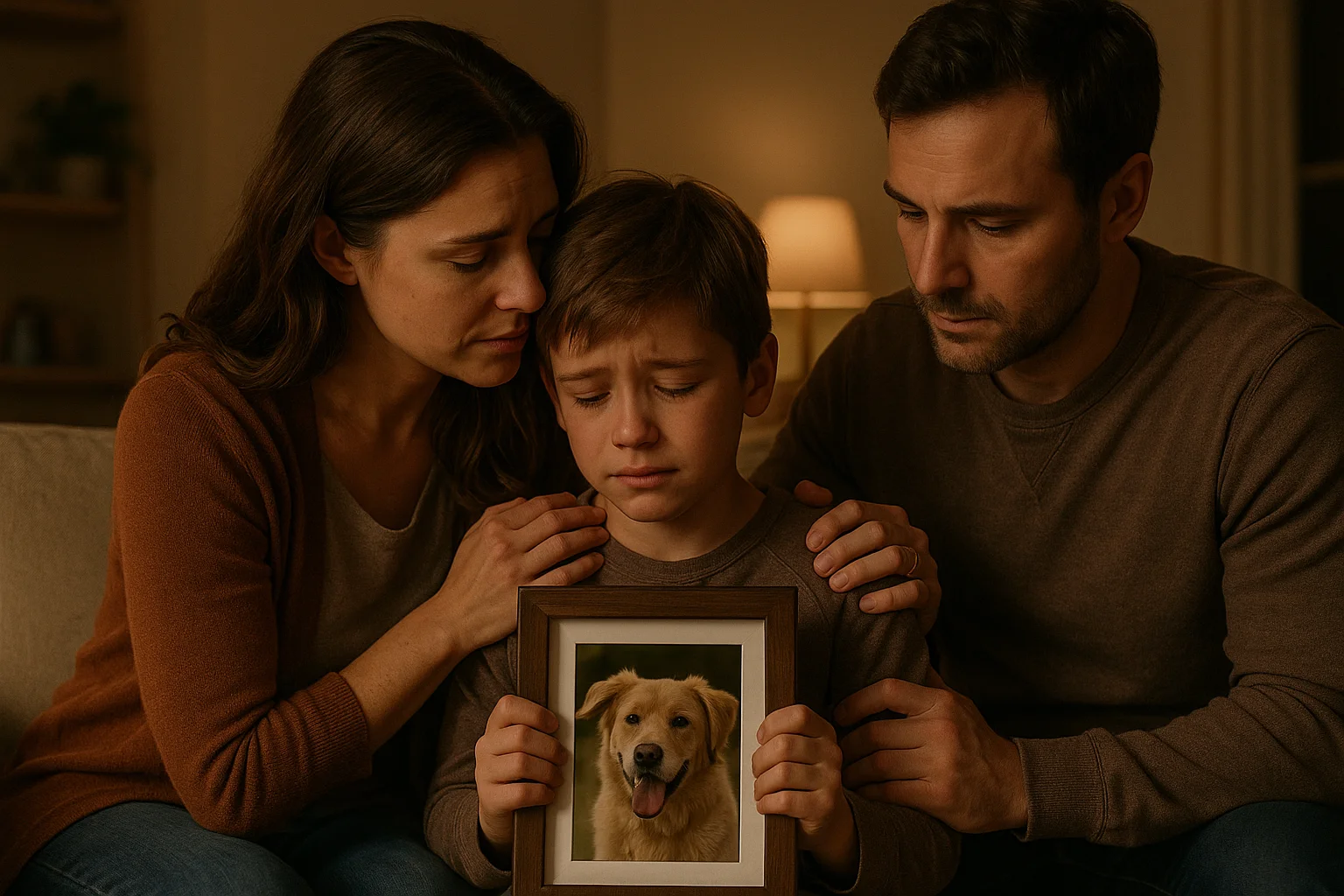
Let them see you grieve. When children watch their parents cry over a dog, they learn that love is worth the pain, that grief is not shameful, and that the family will get through hard things together. These are among the most important lessons a childhood pet can teach.
What to do with their things
There is no timeline for this. Some people need the bed and bowls gone immediately because seeing them is unbearable. Others keep them out for months because putting them away feels like a second loss. Both responses are normal. Neither is wrong.
When you are ready, here are options. Wash and donate beds, leashes, and toys to a local shelter — most accept gently used items and are always in need. Keep one or two items that carry the most meaning: the collar, a favorite toy, a tag. Some families frame the collar. Some keep it in a drawer. Some wear the tag on a necklace.
Unused food can be donated to shelters or food banks that accept pet food. Medications, as mentioned, can go back to your vet or a rescue group. Crates and gates are always in demand at foster organizations.

Notify the people who need to know
Your dog walker, groomer, daycare, trainer, and pet sitter should hear from you when you are ready. A simple message is enough — most of these people loved your dog too, and they would rather hear from you than wonder why appointments stopped. Your dog's veterinary clinic will update their records, but a personal note to a vet or tech who was especially close to your dog means more than you might think.
If your dog was a regular at a park, a coffee shop, or a neighbor's yard, those people will notice the absence. You do not owe anyone an explanation, but you may find comfort in the conversations that follow. The barista who always had a biscuit behind the counter, the neighbor who snuck treats over the fence — they are grieving a small version of what you are grieving, and sharing that can lighten the weight for everyone.
The grief that comes later
You may be fine for the first few days. Adrenaline, logistics, and the support of people around you can carry you through the initial wave. The grief that blindsides most people hits somewhere around day five to day fourteen, often when the house goes quiet and the routines that revolved around the dog — the morning walk, the evening feeding, the sound of nails on hardwood — suddenly have no purpose.
You may cry in the car. You may lose it in the pet food aisle at the grocery store. You may wake up at 5 a.m. because your body remembers it is time for a walk that is not happening anymore. You may feel guilty for laughing at something three days later. All of this is normal. None of it means you are doing grief wrong.
Pet grief is disenfranchised grief — meaning society does not always validate it the way it validates the loss of a human. You may hear "it was just a dog" from someone who has never loved one. That comment says everything about them and nothing about your loss. The depth of your grief is the exact measure of your love, and no one gets to tell you that love was not real.
“The depth of your grief is the exact measure of your love, and no one gets to tell you that love was not real.”
When to seek support
If your grief is interfering with your ability to work, sleep, eat, or care for yourself or others after several weeks, consider speaking with a counselor who understands pet loss. The Association for Pet Loss and Bereavement offers resources, and many therapists now specialize in animal grief. There are also online support groups where you can share your story with people who understand without explanation.
If you have other pets in the house, watch them too. Dogs grieve. They may search for their companion, eat less, or become unusually clingy. Give them extra attention and maintain routines as much as possible. They are processing the absence in their own way.
Creating a memorial
When you are ready — and there is no rush — creating a memorial can be a meaningful way to honor your dog's life. This might be as simple as framing a favorite photo, or as elaborate as a dedicated page where family and friends can share memories and photos together.
The act of gathering photos, writing down memories, and creating something permanent can be deeply healing. It transforms grief into something active — a project of love rather than a weight to carry. Your dog's story does not end because they are gone. It just changes form.
A final word
You will get through this. Not over it — through it. The love you gave that dog was not wasted. The walks, the vet visits, the 3 a.m. trips outside, the couch space you surrendered, the food you pretended not to share — all of it mattered. All of it was received. You gave a living creature a safe, warm, loved life from beginning to end, and that is one of the most honorable things a person can do.
Take your time. Be gentle with yourself. And when you are ready to remember them — not just the ending, but the whole beautiful, messy, loyal, extraordinary life of them — we will be here.
“Where they wait for us.”