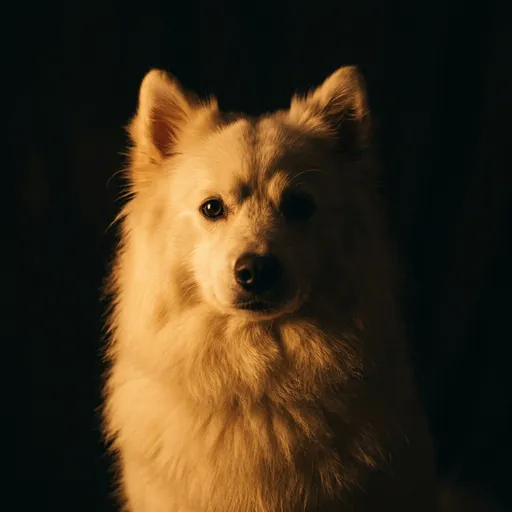
American Eskimo Dog · Non-Sporting Group
The American Eskimo Dog Wall
The wall is forming · Be among the first families to add yours
Those who have crossed
Snowball
March 2010 – August 2024
The white coat against every background — snow, grass, tile — always the brightest thing in the photo
Example
Koda
September 2011 – January 2024
The trick sequence — spin, bow, shake — captured in videos from every birthday
Example
Bella
June 2009 – November 2023
The smile. Every photo, that specific Eskie grin — black lips, white teeth, eyes that knew they had an audience
Example
Frost
January 2012 – April 2024
A child and a dog grow up together across twelve years of holiday photos
Example
Cloud
April 2011 – September 2023
The living room performance space — the same spot where tricks were rehearsed for twelve years
Example
Pages marked 'example' are demonstration bridges showing what a memorial looks like — not real families. The small lines beneath each are examples of what Memory Weather surfaces over time.
Remembrance
American Eskimo Dogs are remembered for the show. They descended from circus performers, and they never forgot it. Every Eskie had a repertoire — tricks they learned, games they invented, routines they rehearsed and then performed with an audience-awareness that was unmistakably theatrical. They knew when you were watching, and they rose to the occasion. That specific delight — a white dog grinning while spinning in the living room, fully aware that they were the best thing in the room — is irreplaceable.
They were brilliant and they knew it. The intelligence was not subtle — it showed up as learned tricks, manipulated routines, and a keen understanding of exactly which behaviors produced the most attention. Living with an Eskie was living with a performer who never took a day off. The stage is dark now.
“She learned to bow on her own. No one taught her. She just started doing it when guests arrived, and the guests clapped, and that was the end of it — she had an act, and she never stopped performing.”
What to remember
When you create a bridge, these prompts help you hold the details that matter most — the ones that fade first.
What was their best trick — the one they performed without being asked, the one that made everyone laugh or applaud?
How did they respond to an audience — visitors, family gatherings, anyone who might watch? Did the performance intensify when they knew they were being observed?
What was the most clever thing they figured out — the game they invented, the problem they solved, the thing you didn't teach them?
Where did they perform — the specific spot in the house that was their stage? The living room rug, the kitchen, the backyard?
What did people say first about that white coat, that smile, those black eyes? What was the comment you heard a hundred times?
When you were sad, did they perform harder — more tricks, more energy — or did they go quiet and press close?
Words that stayed
“Eighteen pounds of white fur and black eyes and a smile that understood exactly how photogenic it was. She never took a bad photo. Not once.”
physical
“He learned to open the treat jar by watching us do it twice. We bought three different jars. He opened all of them.”
funny
“The living room has no performer now. The tricks are unrehearsed. The audience — us — is still here, but the show is over.”
absence
“She knew when she was being watched. The grin got wider, the spins got faster, the whole act elevated. She was the most deliberate performer we ever knew, and she was a dog.”
character
“Fifteen years. Fifteen years of encore after encore. We would have watched for fifteen more.”
time
The math
American Eskimo Dogs typically live 13–15 years.
Progressive retinal atrophy is a significant concern, potentially leading to blindness in senior years. Hip dysplasia and Legg-Calve-Perthes disease affect joints, particularly in miniature and toy varieties. Diabetes is more common in older Eskies than in most breeds, requiring blood sugar monitoring. Dental disease — especially in the smaller sizes — demands consistent care throughout life. The long lifespan means health management is a marathon, not a sprint.
If your Eskie is in their senior years, this is the right time to start their bridge — while the specific memories are still sharp.
Start their bridge now →The shape of this loss
American Eskimo Dog families grieve a performer. The daily show — the tricks, the games, the grin that intensified when they knew they had your attention — was the rhythm of the household. Fifteen years of that performance builds something that goes beyond pet ownership. It is a collaboration. The audience and the performer shaped each other's days, and now the audience is sitting in an empty theater.
People who only saw the white coat and the cute tricks didn't see the intelligence behind them. Eskies were calculating — in the best sense — always reading the room, always adjusting the act, always figuring out what made you laugh. The grief includes the loss of a mind that was genuinely engaged with yours, not just a pet that responded to commands.
The show ran for fifteen years and closed without warning. There will be no encore.
The show ran for fifteen years and closed without warning. There will be no encore.
Memory Weather
How a bridge deepens with timeOver time, WenderBridge surfaces patterns already present in the photos and memories you choose to keep here.
Your Eskie's photos reveal the white coat — always the brightest element in every frame, against every background, in every season.
Memory Weather notices the smile. That specific Eskie grin — black lips, bright eyes, aware of the camera — appears more often than any other expression.
The performance space. The same living room rug, the same kitchen tile — the spot where tricks were rehearsed and perfected, year after year.
Memory Weather is available with Full settings.
Questions families ask
Add your Eskie to the wall
Every American Eskimo Dog who performed in the living room, invented their own tricks, and smiled for every audience deserves a permanent place on the wall. Their bridge is free to create, free to visit, and never behind a paywall — because the best show in the house was always free.
Celebrating a living Eskie?
If your American Eskimo Dog is currently spinning in the living room while making direct eye contact to ensure you're watching, WenderPets has the sculptures and gifts made for that exact white-coated, audience-aware, magnificent performer.
WenderPets →American Eskimo Dog bridges are hosted permanently and will never disappear.