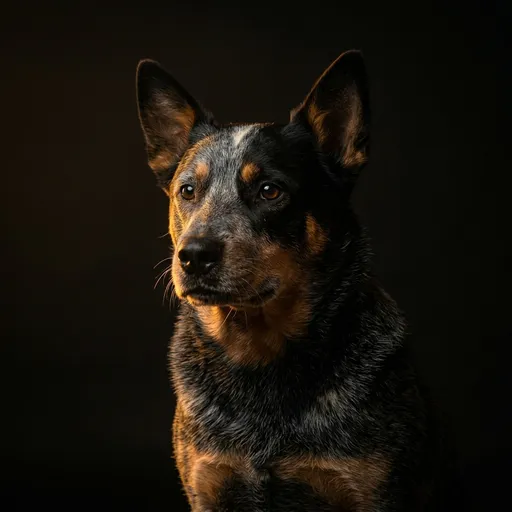
Australian Cattle Dog · Herding Group
The Australian Cattle Dog Wall
The wall is forming · Be among the first families to add yours
Those who have crossed
Koda
April 2010 – August 2024
The same boots appear in every outdoor photo — he was always at heel
Example
Rusty
September 2011 – March 2025
Thirteen years of truck rides surfaced across four states
Example
Blue
January 2012 – November 2023
One person appears in every photo — he chose his human early
Example
Maggie
July 2009 – February 2024
Cattle pens and open pasture fill the early years
Example
Ace
March 2013 – December 2024
The frisbee surfaces in more photos than any other object
Example
Tilly
June 2011 – September 2023
A red speckled coat against green pasture — the same farm, twelve years
Example
Pages marked 'example' are demonstration bridges showing what a memorial looks like — not real families. The small lines beneath each are examples of what Memory Weather surfaces over time.
Remembrance
Australian Cattle Dogs were remembered for the drive — the relentless, built-for-the-outback intensity that never fully turned off, even in a suburban backyard. They herded children, bicycles, the cat, and sometimes the wind itself. They were not pets who happened to live in your house. They were working partners who happened to not have cattle.
They chose their person with a loyalty that bordered on exclusion. ACDs were not everyone's dog — they were one person's dog, completely and without reservation. The shadow that followed you from room to room was not neediness. It was the working bond made domestic. The house had a rhythm when they were in it.
“He bit the mailman exactly once, herded my kids until they were old enough to drive, and spent his last year following me so closely I tripped over him four times a day. I would trip over him every day for the rest of my life if I could.”
What to remember
When you create a bridge, these prompts help you hold the details that matter most — the ones that fade first.
What did they herd? Children, bicycles, other dogs, you? Describe the nip, the crouch, the look in their eye when something needed to be moved.
Who was their person? How did they show it — and how did they treat everyone else differently?
What job did they assign themselves in the house? Guarding the door, watching the yard, supervising dinner — what was their self-appointed task?
Where did they ride? Truck bed, front seat, backseat with their head between the seats — where was their spot in the vehicle?
What did they do when they were bored and no one gave them a job? What got destroyed, rearranged, or claimed?
Describe the last good working day — the last time they moved like the dog they were built to be, before the slowing.
Words that stayed
“She weighed 42 pounds and managed every living thing on the property including the horses, the barn cats, and me.”
physical
“He nipped exactly one dinner guest on the ankle. The guest had been warned. He regretted nothing.”
funny
“The truck still idles in the driveway some mornings. Nobody jumps in the back anymore.”
absence
“He followed me from room to room for fourteen years as though each room contained a new assignment only he could complete.”
character
“Fifteen years. The toughest dog we ever knew. We were not tough enough for this.”
time
The math
Australian Cattle Dogs typically live 12–16 years.
Progressive retinal atrophy can affect vision in older ACDs, and hip and elbow dysplasia are common structural concerns. Deafness — particularly linked to the blue coat gene — is a known risk. ACDs often stayed tough and active well into their senior years, masking decline until it was well advanced. The dog who never slowed down eventually did.
If your Cattle Dog is in their senior years, this is the right time to start their bridge — while the drive and intensity are still visible.
Start their bridge now →The shape of this loss
The toughest working dog went quiet. ACDs were built for the Australian outback — heat, dust, cattle, miles. That specific, indestructible drive stopped. The heeler has nothing left to herd.
ACD grief is a particular kind of silence. These were not quiet dogs in life — not loud, necessarily, but present in every room, every task, every movement through the house. The shadow that tracked you from kitchen to yard to truck to field is gone. The absence is physical. You can feel the space behind you where they used to be.
People who didn't know the bond don't always understand. ACDs were not golden retrievers — they didn't love everyone. They loved you. And that specificity is what makes the loss so precise.
The heeler has nothing left to herd.
Memory Weather
How a bridge deepens with timeOver time, WenderBridge surfaces patterns already present in the photos and memories you choose to keep here.
Your Cattle Dog's photos reveal the same truck, the same property line, the same boots — the territory they patrolled for years.
Memory Weather notices one person appears more than any other. The bond was visible long before it was named.
Dust, grass, open sky — the landscape of a working dog surfaces across every season.
Memory Weather is available with Full settings.
Questions families ask
Add your Cattle Dog to the wall
Every Australian Cattle Dog who has been loved deserves a permanent home on the wall. Their bridge is free to create, free to visit forever, and free to share — because the work they gave was never about the paycheck.
Celebrating a living Australian Cattle Dog?
If your Cattle Dog is currently herding something that does not need herding and looking extremely satisfied about it, WenderPets is where you'll find the sculptures, lamps, and gifts made just for them.
WenderPets →Australian Cattle Dog bridges are hosted permanently and will never disappear.