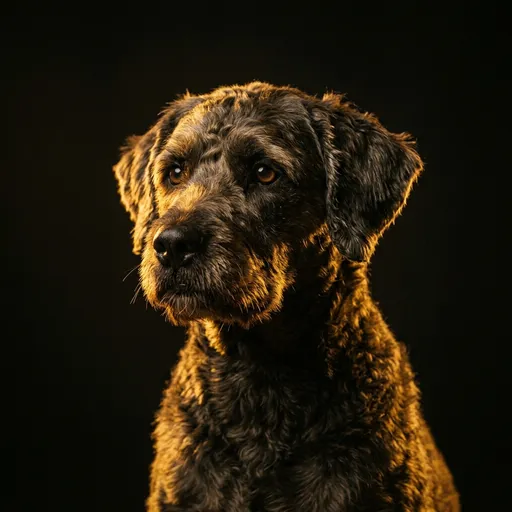
Boxerdoodle · Boxer × Poodle mix
The Boxerdoodle Wall
The wall is forming · Be among the first families to add yours
Those who have crossed
Tank
March 2013 – September 2023
The same toy — shredded and replaced four times — appears across every year
Example
Luna
July 2012 – February 2024
Every greeting photo shows the same mid-air posture — all four paws off the ground
Example
Bruno
January 2014 – November 2024
A backyard appears in every season — the same worn path along the fence
Example
Ziggy
May 2011 – April 2023
Children appear growing taller while wrestling the same dog
Example
Roxy
August 2013 – June 2024
The couch cushions are displaced in nearly every indoor photo
Example
Pages marked 'example' are demonstration bridges showing what a memorial looks like — not real families. The small lines beneath each are examples of what Memory Weather surfaces over time.
Remembrance
Boxerdoodles are remembered for the energy — the Boxer bounce combined with the Poodle brain, producing a dog that was simultaneously athletic and calculating about which athletic display would get the biggest reaction. They didn't just play — they performed. The pawing, the wiggling, the full-body greeting that left no piece of furniture undisturbed. They were physical comedians who knew their audience.
They filled a room not with sound but with motion. A Boxerdoodle's presence was kinetic — they were always doing something, always engaging, always making the space feel full and slightly chaotic in the best possible way. When that motion stops, the stillness is overwhelming.
“He would do the Boxer wiggle — the whole back half going sideways — and then look at you to make sure you were watching. If you weren't, he would do it again, louder.”
What to remember
When you create a bridge, these prompts help you hold the details that matter most — the ones that fade first.
What was the greeting like? Describe the full-body production — the bounce, the wiggle, the pawing, the sound.
What did they destroy, and did they seem proud of it, sorry about it, or completely unaware it had happened?
What was their funniest physical move — the Boxer wiggle, the paw-boxing, the thing that made everyone in the room stop and laugh?
How did they settle down at the end of the day? Was there a switch that flipped, or did they fight sleep like a child?
What would a stranger notice first — the size, the energy, or the immediate attempt to engage them in some kind of physical game?
When someone was crying, did the energy change? Did they go gentle, or did they try to fix it by being more themselves?
Words that stayed
“He was fifty-five pounds of muscle that moved like it was spring-loaded. When he ran toward you, the ground shook a little. We loved that.”
physical
“She ate one couch cushion, two pairs of shoes, and a remote control. She showed no remorse for any of it. We miss the chaos.”
funny
“The house is still now. Actually still. Nothing bounces off the walls. Nothing slides across the floor. The energy left when she did.”
absence
“He knew exactly which trick made us laugh the hardest, and he deployed it like a weapon. The Boxer wiggle, on command, every time someone new walked in. He was a professional.”
character
“Eleven years. Not enough for a dog that big, that alive, that present. Not nearly enough.”
time
The math
Boxerdoodles typically live 10–13 years.
From the Boxer side, cardiomyopathy and aortic stenosis are significant cardiac concerns, and the Boxer's elevated cancer risk — particularly for mast cell tumors and lymphoma — carries into the cross. The Poodle contribution adds risks for hip dysplasia, bloat in larger Boxerdoodles, and Addison's disease. Many Boxerdoodle families navigate the cancer conversation or cardiac monitoring in the later years.
If your Boxerdoodle is in their senior years, this is the right time to start their bridge — while the specific memories are still sharp.
Start their bridge now →The shape of this loss
Boxerdoodle grief is the grief of losing motion. They were not still dogs — they were kinetic, physical, present in a way that engaged the body as much as the heart. The Boxer side gave them bounce and comedy. The Poodle side gave them the awareness of exactly how funny they were. When that stops, the house doesn't just go quiet. It goes flat.
People who loved calmer breeds may not understand. The chaos was the point. The destroyed cushion, the counter-surfing, the greeting that knocked you back a step — it was all part of the deal, and it was all part of the love. The absence of chaos is not peace. It is emptiness wearing a calm mask.
They were too much, in the best way. And now there is not enough.
They were too much, in the best way. And now there is not enough.
Memory Weather
How a bridge deepens with timeOver time, WenderBridge surfaces patterns already present in the photos and memories you choose to keep here.
Your Boxerdoodle's photos show motion — blurred tails, mid-leap captures, the full-body wiggle frozen in frame after frame.
Memory Weather notices the toys. Destroyed and replaced across the years, but the play style stayed exactly the same.
Children grow taller in the photos. The Boxerdoodle's energy level stays constant — the same bounce at ten as at two.
Memory Weather is available with Full settings.
Questions families ask
Add your Boxerdoodle to the wall
Every Boxerdoodle who filled a house with motion and joy deserves a permanent place on the wall. Their bridge is free to create, free to visit forever, and free to share — because the energy they brought was never for sale. It was a gift.
Celebrating a living Boxerdoodle?
If your Boxerdoodle is currently doing the full-body wiggle at someone who just walked through the door, WenderPets has the sculptures and gifts made for exactly that kind of joyful chaos.
WenderPets →Boxerdoodle bridges are hosted permanently and will never disappear.