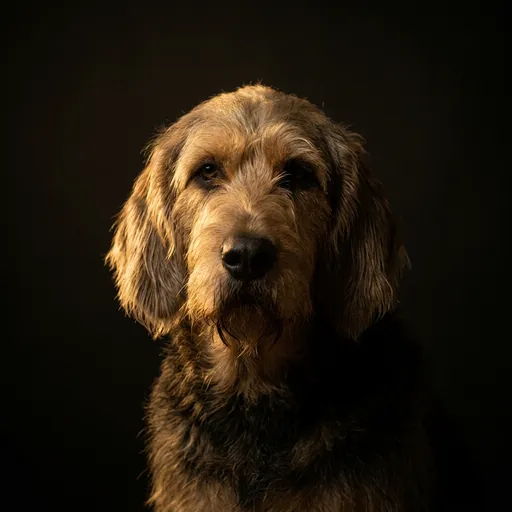
Otterhound · Hound Group
The Otterhound Wall
The wall is forming · Be among the first families to add yours
Those who have crossed
Hugo
April 2012 – March 2023
Water surfaces in every season — rivers, puddles, the garden hose he refused to leave alone
Example
Willa
September 2013 – November 2024
The same shaggy outline appears in 42 photos, never once fully dry
Example
Barnaby
January 2011 – August 2022
Three different rivers noticed across eleven years of weekends
Example
Pippin
June 2014 – February 2025
The baying captured in two videos — the sound fills the kitchen both times
Example
Mabel
March 2010 – July 2021
Webbed paw prints surface along the same creek bank, year after year
Example
Rowan
October 2015 – December 2024
A nose pressed to the ground finds every photo taken outdoors
Example
Pages marked 'example' are demonstration bridges showing what a memorial looks like — not real families. The small lines beneath each are examples of what Memory Weather surfaces over time.
Remembrance
Otterhounds were remembered for the absurdity — a massive, shaggy, webbed-footed hound bred to chase otters through English rivers, living on your couch and baying at the refrigerator. They were clowns who happened to have one of the most powerful noses in the canine world, and they used that nose to find exactly the thing you didn't want them to find.
They were rare in the most literal sense. Fewer than 600 existed worldwide, and one of them lived in your house, ate your food, swam in your creek, and filled your rooms with a sound that no other breed could replicate. The rarity was not an abstraction. It was the specific dog who was here.
“People would stop us on walks and say 'what IS that?' — every single time. He was the only Otterhound most people had ever seen. He was the only Otterhound I'll ever have.”
What to remember
When you create a bridge, these prompts help you hold the details that matter most — the ones that fade first.
What was their relationship with water? Describe the first time they found a river, a puddle, or the garden hose — and what happened.
What did their bay sound like? When did they use it — and did the neighbors have opinions?
What did their nose lead them to that it shouldn't have? The counter, the trash, the thing buried in the yard three weeks ago?
How did you explain what breed they were? What did strangers guess, and how wrong were they?
What was their most absurd moment — the thing they did that made no sense for a dog their size?
Did you ever think about the rarity — that fewer than 600 exist — while they were alive? When did it hit you?
Words that stayed
“He weighed 115 pounds and believed he was a lapdog. He was not wrong — he simply redefined what a lap was for.”
physical
“She found the one mud puddle in a freshly mowed yard within nine seconds. Every time. For eleven years.”
funny
“The house still smells faintly of wet dog. We haven't washed the blanket. We're not going to.”
absence
“Fewer than 600 in the world, and one of them chose our couch. We were the lucky ones.”
character
“Eleven years with one of the rarest dogs on earth. It was not enough. It was never going to be enough.”
time
The math
Otterhounds typically lived 10–13 years.
Hip dysplasia and bloat were the primary concerns in aging Otterhounds. Glanzmann's thrombasthenia — a rare bleeding disorder found in the breed — complicated surgeries and injuries in ways that required careful veterinary awareness. Epilepsy appeared in some lines. With a global population under 600, every health event carried weight beyond the individual dog.
If your Otterhound is in their senior years, this is the right time to start their bridge — while the shaggy, baying, river-loving details are still happening daily.
Start their bridge now →The shape of this loss
One of the rarest dogs on earth lived in your house — fewer than 600 exist worldwide. That specific shaggy, webbed-footed, river-loving clown is irreplaceable in the most literal sense.
Otterhound grief carries a dimension that other losses do not. You cannot simply get another one. The breed itself is vanishing — the waitlists are years long, the breeders are few, and the genetic pool is shrinking. The dog you lost was not just your companion. They were part of a population that may not survive the century.
The bay is what most families name first. That enormous, musical, absurd sound that filled the house and annoyed the neighbors and made you laugh even when you were trying to be annoyed. The silence where the bay was is a specific kind of silence.
Fewer than 600 in the world. One of them was yours.
Memory Weather
How a bridge deepens with timeOver time, WenderBridge surfaces patterns already present in the photos and memories you choose to keep here.
Your Otterhound's photos reveal water in almost every frame — creeks, rivers, puddles, the hose they refused to walk past.
Memory Weather notices the shaggy outline never appears fully dry. Not once across all uploaded photos.
A nose pressed to the ground surfaces in more photos than any other posture — the scent trail was always the priority.
Memory Weather is available with Full settings.
Questions families ask
Add your Otterhound to the wall
Every Otterhound who has been loved deserves a permanent home on the wall. Their bridge is free to create, free to visit forever, and free to share — because one of the rarest dogs on earth deserves to be remembered.
Celebrating a living Otterhound?
If your Otterhound is currently soaking wet and looking extremely pleased about it, WenderPets is where you'll find the sculptures, lamps, and gifts made just for them.
WenderPets →Otterhound bridges are hosted permanently and will never disappear.