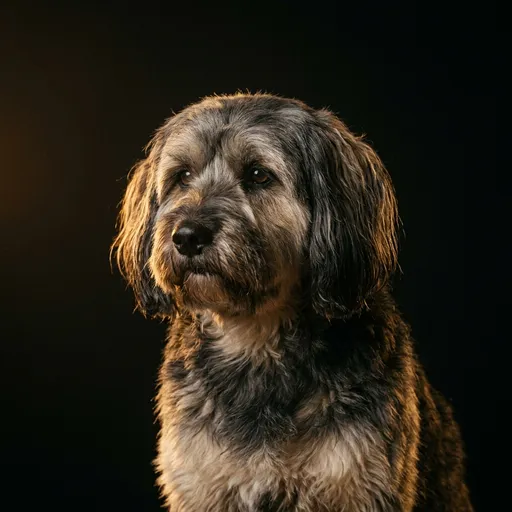
Tibetan Terrier · Non-Sporting Group
The Tibetan Terrier Wall
The wall is forming · Be among the first families to add yours
Those who have crossed
Tashi
May 2008 – September 2024
Sixteen years of photos reveal three different homes — she adapted to every one
Example
Lhasa
January 2010 – March 2025
The same lap surfaces across fifteen years of evening photos
Example
Pema
August 2007 – November 2023
A child appears at age four and leaves for college — the dog witnessed both
Example
Momo
March 2011 – July 2025
The long coat changes from black to silver across the photo collection
Example
Dolma
June 2009 – January 2024
Morning sunlight finds her in the same window spot across fourteen years
Example
Koda
October 2010 – December 2025
The flat snowshoe feet surface in beach photos — always the same wide-footed stance
Example
Pages marked 'example' are demonstration bridges showing what a memorial looks like — not real families. The small lines beneath each are examples of what Memory Weather surfaces over time.
Remembrance
Tibetan Terriers were remembered for the steadiness — the quiet, long-coated presence that did not demand attention but somehow restructured the rhythm of the house around itself. They were not dramatic dogs. They did not perform loyalty. They simply stayed, year after year, until the staying itself became the deepest statement.
They were the holy dog. Buddhist monks kept them as companions and good luck charms, and they were never sold — only given as gifts. That origin said something true about the breed: Tibetan Terriers did not arrive in your life through transaction. They arrived as a kind of blessing. And they stayed long enough for you to understand what that meant.
“She was there when we moved in. She was there when the kids left. She was there when it was just us again. Fifteen years. She was the only witness to the whole thing.”
What to remember
When you create a bridge, these prompts help you hold the details that matter most — the ones that fade first.
How long were they with you? Not just the number — what changed in your life between the day they arrived and the day they left?
Where did they settle? The exact spot — the window, the chair, the place they returned to every single day for years.
What was their coat like? The texture, the weight of it, the grooming ritual that became part of your routine.
Who did they bond to most deeply? How did they show it — not dramatically, but in the quiet, steady way TTs show everything?
What life event did they witness? A birth, a move, a loss, a change — what did your Tibetan Terrier sit through with you?
What did the house feel like the first morning without them? After all those years of their presence, what was the specific shape of the absence?
Words that stayed
“She had flat feet like snowshoes and a coat that required forty-five minutes every Sunday. We would give anything for one more Sunday.”
physical
“He was called a terrier by Europeans who had never met a real one. He didn't care. He wasn't trying to impress anyone.”
funny
“The window spot is still warm in the afternoon. No one sits there now. It has been months and no one sits there.”
absence
“She was a gift. That's what the monks said — Tibetan Terriers were never sold, only given. Our luck arrived as a dog. The luck left.”
character
“Fifteen years. She outlasted the renovation, the second child, and two cars. She was the longest thing we had.”
time
The math
Tibetan Terriers typically live 15–16 years.
Progressive retinal atrophy and lens luxation can affect vision in the later years — many TT families navigate a dog who adapted to diminishing sight with extraordinary calm. Hip dysplasia occurs in the breed, and neuronal ceroid lipofuscinosis (NCL) is a rare but serious neurological condition. The length of their lives meant the health conversations lasted longer, too.
If your Tibetan Terrier is in their senior years, this is the right time to start their bridge — while the fifteen years of specific memories are still clear.
Start their bridge now →The shape of this loss
The length is the grief. Tibetan Terrier families had their dog for fifteen, sixteen years — long enough to mark an era. The dog who arrived when the children were small was still there when the children left. The dog outlasted jobs, houses, sometimes marriages. Losing a Tibetan Terrier doesn't feel like losing a pet. It feels like losing a chapter.
People understand dog loss. But they don't always understand what fifteen years means. They say 'at least you had them a long time,' and they mean well, but the math works the other way — the longer the dog was there, the more of your life they witnessed, and the more of your life feels unwitnessed without them.
The holy dog. Tibetan Terriers were never sold — only given as gifts of good luck. Your family's luck arrived as a long-coated, gentle, monastery-bred companion. The luck left.
The luck left.
Memory Weather
How a bridge deepens with timeOver time, WenderBridge surfaces patterns already present in the photos and memories you choose to keep here.
Your Tibetan Terrier's photos reveal the same resting spot — the same window, the same chair — across more than a decade of images.
Memory Weather notices the coat changing. The long hair surfaces in different colors across the years — darker at the beginning, silver toward the end.
The humans in the photos age visibly. The dog's presence remains constant until it doesn't.
Memory Weather is available with Full settings.
Questions families ask
Add your Tibetan Terrier to the wall
Every Tibetan Terrier who has been loved deserves a permanent home on the wall. Their bridge is free to create, free to visit forever, and free to share — because the luck they brought was never something you could buy.
Celebrating a living Tibetan Terrier?
If your Tibetan Terrier is currently occupying the same spot they've claimed for the last twelve years and showing no intention of moving, WenderPets is where you'll find the sculptures, lamps, and gifts made just for them.
WenderPets →Tibetan Terrier bridges are hosted permanently and will never disappear.