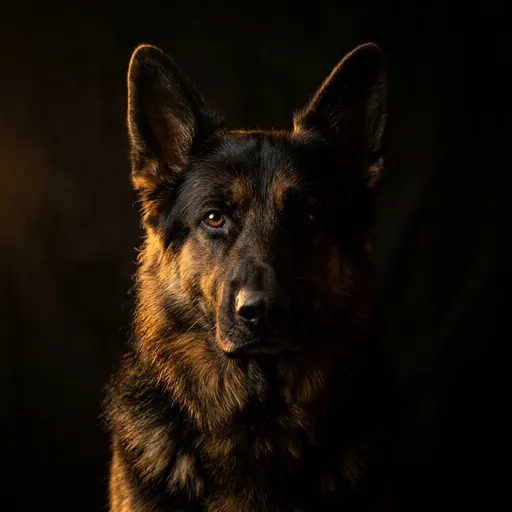
What It Is Like to Lose a German Shepherd
The unguarded house
The unguarded feeling is what German Shepherd families name first. Not physical safety — something deeper than that. The Shepherd watched everything, tracked everything, positioned themselves between you and whatever came through the door. That layer of awareness is gone now, and the house feels exposed in a way that a security system cannot address.
German Shepherd grief is not the grief of losing a companion. It is the grief of losing a partner. They did not sit beside you — they worked beside you. They patrolled the yard without being asked. They checked every window when a sound came from outside. They followed you from room to room not out of neediness but out of duty, and the line between duty and love was so blurred it may not have existed at all.
The one-person bond
German Shepherds chose a person. One person, usually. Everyone else in the house was tolerated, even loved — but one person was theirs. They followed that person from room to room. They watched that person with an intensity that other breeds do not attempt. They knew when that person was sad, or anxious, or about to leave, and they responded not with tricks but with presence — the deliberate act of being exactly where they were needed.
That person knows exactly what was lost. The rest of the world sees a large dog. That person lost the only creature who ever watched them that carefully and stayed anyway.
What the world got wrong
People who did not know your Shepherd sometimes offer the wrong sympathy. They remember the breed's reputation — police dogs, guard dogs, the silhouette on the warning sign. They do not know about the head in your lap during the thunderstorm. The belly-up sleeping position that took three years of trust to earn. The way they leaned their entire weight against your legs while you stood at the kitchen counter, not because they wanted something, but because that was where you were.
German Shepherds typically live 9–13 years. Degenerative myelopathy — the progressive loss of hind-leg function — affects the breed at higher rates than most. Hip dysplasia is common. The final months often involve watching the strongest dog you have ever known lose the ability to do what they were built to do. They still try to stand when you come home. They still try to follow you to the door. The spirit outlasts the body, and that gap is where the hardest grief lives.
What remains
The things that stay are architectural. The spot by the front door where they always positioned themselves. The path worn into the yard from their patrol route. The way you still pause at the top of the stairs, expecting to see them at the bottom, watching. The house has not changed. The sentinel has.
German Shepherd grief does not fade. It redistributes. The acute phase — the empty doorway, the unleashed walk, the unpatrolled yard — gives way to something more structural. You adjust to the exposure. You do not stop feeling it. You just stop being surprised by it.
A bridge for them
WenderBridge exists because we believe every dog who was loved deserves a permanent place. A German Shepherd's bridge is free to create, free to visit forever, and free to share — because the loyalty they gave was never conditional, and the place that honors it shouldn't be either.
“Where they wait for us.”